If you talk to surveyors and field crews lately, you’ll hear the same complaint again and again: utility locate mistakes keep causing jobsite problems. Paint marks don’t match reality. Map screenshots replace field checks. Old records get treated like the exact truth. Then digging starts — and suddenly everything stops. As a result, projects stall, costs rise, and tempers flare. However, most property owners and developers don’t see what went wrong. They assume the locate was done, so the data must be correct. In real field conditions, that assumption often fails. This is exactly where a proper construction survey makes a major difference.
The Hidden Problem Behind Many Utility Mistakes
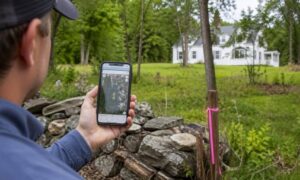
At first glance, utility locate data looks official. You see colored paint, flags, and digital maps. Therefore, it feels reliable. But many of those sources only show approximate positions.
For example, utility data often comes from:
- old record drawings
- GIS map layers
- utility company databases
- prior contractor notes
These sources help — but they don’t guarantee field accuracy.
Meanwhile, ground conditions change. Crews reroute lines. Repairs happen without clean records. Over time, the map and the dirt drift apart. When teams rely only on records, mistakes slip in.
That’s why surveyors grow frustrated. They see crews trust weak data — then blame the field when conflicts appear.
Why These Errors Are Showing Up More Often Now
Utility conflicts didn’t start this year. Still, they show up more often today for a few clear reasons.
First, many towns have aging infrastructure. Lines moved over decades, yet records didn’t keep pace. Second, digital mapping tools spread fast. Because of that, people trust screen data more than field checks. Third, project timelines keep shrinking. Crews feel pressure to move fast, so they skip deeper verification.
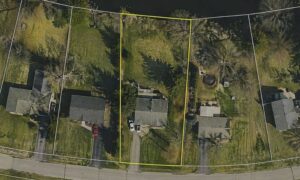
Also, different groups manage different utilities. One map rarely shows the full picture. So when teams stack partial data together, gaps remain.
Consequently, field crews face surprises during excavation. And every surprise costs time and money.
Where a Construction Survey Changes the Outcome

Now let’s shift to the solution.
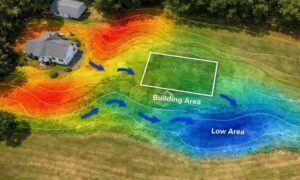
A construction survey doesn’t just mark layout points. Instead, it builds a reliable control framework across the site. That framework lets teams compare plans, records, and field evidence using the same coordinate system.
In practice, that means surveyors can:
- establish fixed control points
- align plans with real ground position
- cross-check utility paths against measured features
- flag conflicts before digging begins
- give crews repeatable reference marks
So rather than trusting one map layer, the team works from verified spatial control.
That step alone prevents many utility locate mistakes.
The Cost of Getting It Wrong
Utility errors don’t just annoy surveyors. They hit project budgets hard.
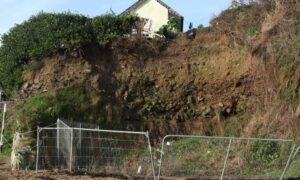
For instance, imagine a trench crew hits an unexpected line. Work stops immediately. Inspectors show up. Engineers revise plans. Crews return later. Everyone bills extra hours.
Or consider a foundation offset discovered after forms go in. The team must shift layout, reset anchors, and repour sections. That delay can push the whole schedule.
In other cases, inspections fail because installed lines don’t match approved positions. Then redesign and rework follow.
Individually, each mistake feels small. However, together they create major overruns. Most of those overruns trace back to weak verification — not bad luck.
Red Flags That Signal Weak Utility Data
Fortunately, you can spot risk early if you know what to watch for.
Pay attention when you hear phrases like:
- “We’re just using the city GIS.”
- “The map should be close enough.”
- “We don’t need survey control for this part.”
- “The locate paint is all we need.”
Also, look for missing pieces:
- no coordinate references
- no site control points
- no cross-check plan
- no licensed survey oversight
When those gaps appear, risk rises. Therefore, bring in a construction survey step before excavation moves forward.
Why Older Developed Areas Carry Higher Risk
This issue grows even bigger on older developed sites.
Older neighborhoods often contain layered utility history. Over time, crews add lines, abandon lines, and reroute lines. Unfortunately, records don’t always show those changes clearly.
Storm repairs add another layer. Emergency fixes happen fast, and documentation sometimes comes later — or never. As a result, the official map slowly drifts away from reality.
Tight lots also raise the stakes. When space shrinks, even small position errors cause conflicts. So verification matters more, not less.
That’s why experienced teams rely on construction survey control more heavily on legacy sites.
How Smart Teams Prevent Utility Locate Failures
The best-performing project teams follow a simple rule: verify early.
They don’t stop at utility locate paint. Instead, they combine locate data with survey control and field measurement. That approach creates a stronger decision base before digging starts.
Smart teams also:
- request survey control before layout
- compare records against measured features
- document reference benchmarks
- confirm coordinate consistency
- involve a licensed surveyor early
Because of that, surprises drop sharply.
Not every project needs deep investigation. Yet every project benefits from verified spatial control. That’s exactly what a construction survey delivers.
“Located” Does Not Mean “Verified”
Here’s the key takeaway.
Located means someone marked an estimated position. Verified means measured data supports that position.
Those two ideas sound similar. In the field, they are very different.
A proper construction survey moves your project from estimated to verified. It replaces guesswork with measured control. It reduces conflict risk before crews commit time and materials.
Right now, surveyors feel frustrated because they keep seeing preventable mistakes. The good news is simple: one early verification step prevents most of them.
So before your next excavation phase begins, ask one question:
Do we have survey-grade control — or just map-based guesses?
That one question can save weeks of delay and thousands in rework.