When you contact survey companies near you for a quote on your property, one of the first questions you’ll hear is about road access. It might seem like an odd place to start. But this question matters more than you think. Property surveyors ask about private road access early because it directly impacts cost, timeline, and accuracy. Understanding why helps you prepare better information and avoid surprises later.
Private roads are common, especially in rural areas and developments. They sit on someone’s land rather than public land. This creates legal and practical complications that affect every survey. A surveyor needs to know whether your property sits on a private road before they can give you an honest quote.
Private Roads Often Come With Access Rights That Need Verification
Private road access isn’t always straightforward. Your property might sit on a private road, but you may not own the road itself. Instead, you likely have an access right. This right could be a recorded easement, an oral agreement, or something written into your deed.
Survey companies need to verify these rights exist. Here’s why: If your property doesn’t have legal access to the road, a surveyor must note that in their findings. This affects property value, insurability, and financing. Lenders want to know the property has documented access.
A surveyor will ask:
- Does your deed mention the road?
- Is there a recorded easement for access?
- Do you have written permission from the road owner?
- Has your family used this access for decades without written agreement?
These details change the survey scope. A surveyor who doesn’t verify access early might miss critical information that emerges during fieldwork. That means extra work, delays, and revised quotes later.
Shared Road Arrangements Can Increase Research Time
Many properties share private roads with neighbors. Five, ten, or even twenty properties might depend on the same road. This creates a web of legal relationships.
Shared roads usually require maintenance agreements. One neighbor might maintain the road while others pay a share of costs. These agreements live in recorded documents, but sometimes they’re just handshake deals between neighbors that have been held for fifty years.
A surveyor researching a property on a shared private road must:
- Track down easement documents for each property using the road
- Review maintenance agreements and cost-sharing arrangements
- Understand priority rights (whose property has first claim to use)
- Identify potential disputes or unclear boundaries
This research takes time. A property on a shared private road might require twice the document review of one on a public road. That’s the time that factors into your survey cost.
The earlier a surveyor knows about shared arrangements, the earlier they can budget research hours. Survey companies ask about this upfront so they don’t underestimate and then surprise you with a higher final bill.
Road Location and Legal Documents Do Not Always Match
Here’s a reality that trips up many developers: the private road shown on your deed might not sit where the physical road actually sits.
Deeds were written years or decades ago. Property lines shift slightly over time due to erosion, fence building, or simple re-interpretation of old survey marks. Roads can be moved or improved without updating recorded documents. A “recorded access road” might have been relocated three feet west in 1987, but the deed still describes the old location.
A surveyor needs to know about access before fieldwork because they can prepare for potential discrepancies. They’ll review:
- The deed description of road location
- The plat map showing the road
- The physical road visible on the ground
- Historical survey records
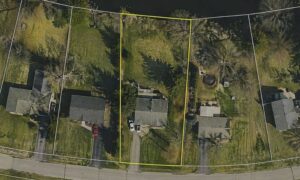
- Satellite imagery changes over time
When these don’t align, the surveyor prepares for fieldwork differently. They might spend extra time measuring, comparing photos, or interviewing neighbors. By asking about road access early, survey companies can plan for these gaps rather than discovering them mid-survey.
This prevents the “your survey is taking longer than expected” conversation later.
Remote Access Routes May Affect Field Operations
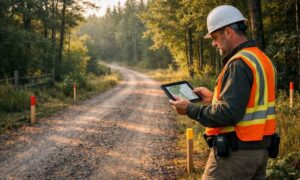
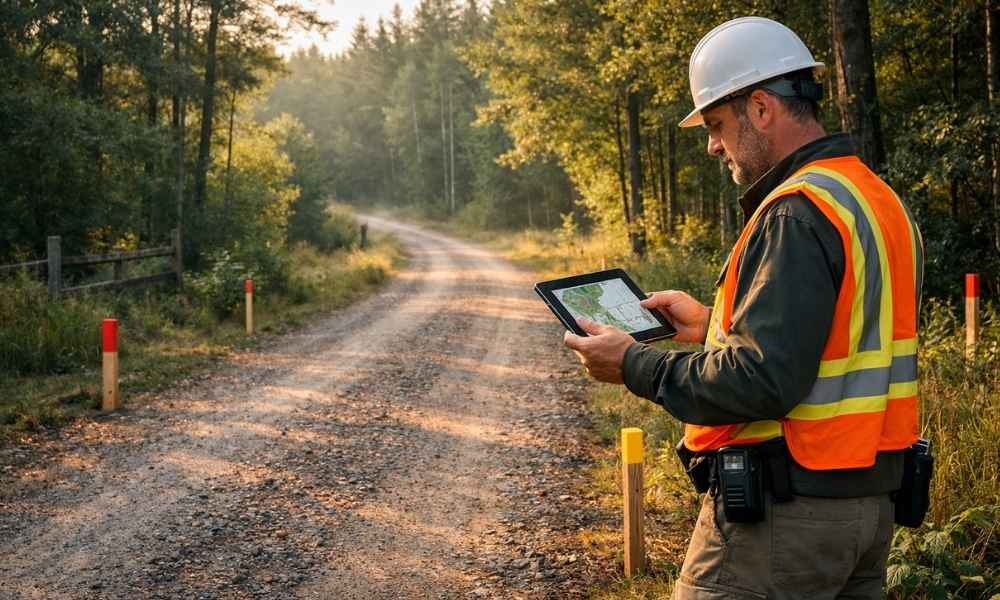
Maine’s terrain is rough in many areas. A private road to your property might be a quarter-mile dirt track through woods. It might have a locked gate. It might be impassable in mud season or snow.
Surveyors work in the field with equipment. They need vehicle access, walking access, or sometimes helicopter or boat access for properties. A remote private road affects logistics.
Survey companies ask about road conditions because:
- Long drives to the site increase travel time and fuel costs
- Locked gates require coordination with owners or permission letters
- Seasonal conditions (mud, snow, flooding) affect scheduling
- Equipment access determines if surveyors can bring vehicles or must hike in
- Rough terrain increases physical demands on crew
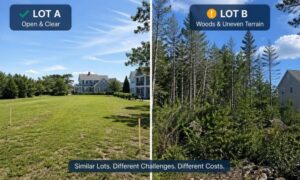
A quote for a property accessible by a maintained private road is different from one requiring a steep hike with hand-carried equipment. The surveyor needs accurate information to estimate hours and price accordingly.
Some Maine properties require early morning access windows or off-season surveys to manage road conditions. The survey company can only plan this if they know about access challenges from the start.
Future Property Plans Often Depend on Access Details
You might be buying a property to develop, subdivide, or build on. Private road access affects all of these plans.
Lenders want survey documentation of legal access before funding. Municipalities require confirmed access before issuing building permits. Buyers want evidence of permanent, reliable access before closing. A subdivision can’t proceed without proving all new lots have legal access.
Survey companies ask about access early because these issues will come up later. A surveyor who documents access issues now saves you from discovering them after you’ve committed to a development timeline or financing.
Early access details also help you understand:
- Whether the road can support subdivision activity
- If maintenance costs will increase with more use
- Whether future neighbors might object to your use of the shared road
- If permission from the road owner is revocable or permanent
Understanding these factors before a survey prevents wasted survey costs and missed development windows.
Frequently Asked Questions
Why does a survey company ask whether my property is on a private road?
Private road access affects the legal description of your property, field operations, and research time. A surveyor needs to know this early to provide an accurate quote and plan fieldwork properly. It’s not optional information.
Can a survey identify access easements connected to a private road?
Yes. Surveyors review recorded documents to identify and map easements. However, older oral agreements or undocumented access arrangements may not appear in a survey. Your surveyor will note this limitation in their report.
Does a private road make a land survey more expensive?
Usually, yes. Private roads require extra document research and may involve field access challenges. However, cost depends on the specific situation. Some shared private roads with clear documentation cost only slightly more than public road properties.
What documents should I provide if my property uses a private access road?
Bring your deed, any access agreements, easement documents, maintenance agreements, and the name and contact information of the road owner. If you have old survey records or plat maps, those help too.
How long does research take for a property on a private road?
It depends on how well documented the access is. Clear, recorded easements might add a few hours. Unclear arrangements or shared roads with multiple properties might add days or weeks.