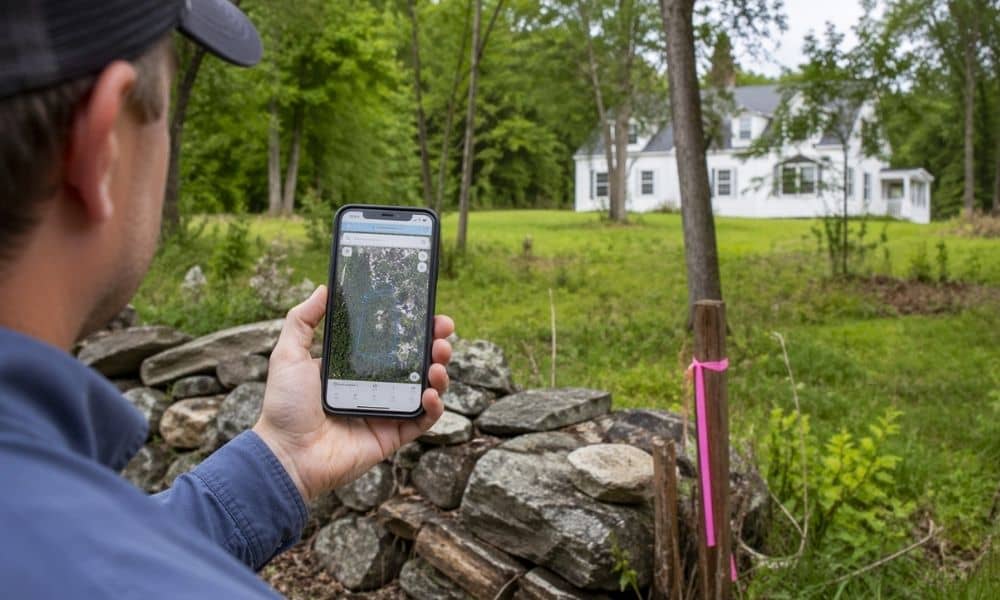
You pull up a property map online. The lines look clean. The lot looks simple. So you move forward with a plan.
Then something feels off.
A fence doesn’t line up. A neighbor questions the boundary. A contractor pauses before starting work.
This happens more often than people think in York, Maine. Most of the time, it comes down to one mistake: trusting what you see on the screen without checking how it actually lines up on the ground.
That’s where real survey mapping data makes a difference.
The problem with “easy” property maps
Online maps are everywhere. You can check your lot in seconds. Sites show boundaries, shapes, and nearby features.
It feels accurate.
That’s the issue.
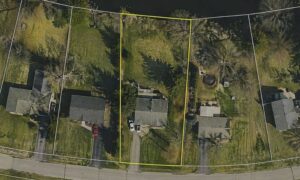
These maps are made for quick viewing, not for real decisions. They pull data from public records, then place it over aerial images. That overlay can shift. It can stretch. It can miss key details.
So while the map looks precise, it’s often just close enough to seem right.
Why people trust them anyway
It’s simple. The lines look official.
Also, most people don’t see a reason to question them. If a map shows a boundary, it must be correct, right?
Not quite.
Even small errors matter. A line off by one or two feet can affect where you build, dig, or install something.
And in a place like York, that margin matters more than you think.
What those maps actually show
Online property maps come from recorded data. That data might come from older surveys, tax maps, or rough measurements.
But they don’t confirm anything on the ground.
They don’t check markers. They don’t adjust for changes over time. They don’t make sure the lines still match what’s really out there.
So what you’re seeing is an estimate, not something that’s been checked through actual survey mapping.
That estimate might work for a quick look, but it falls short when you’re planning anything on your property.
Where survey mapping is different
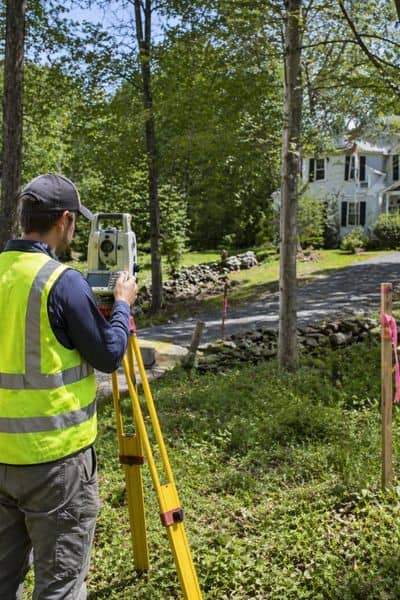
Survey mapping works in the real world, not just on a screen.
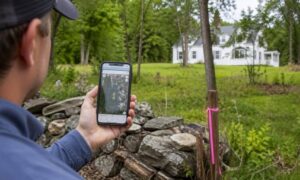
A surveyor studies the legal description of your property. Then they go outside and measure it. They locate corners. They find markers. They compare what’s recorded to what exists today.
If something doesn’t match, they figure out why.
That process creates a map you can rely on. Not a guess. Not an overlay. A verified layout of your property.
Small errors turn into real problems
Most people don’t plan to make a mistake. They follow what they see.
That’s where things go wrong.
A fence goes up based on an online line. Later, it turns out the fence crosses into a neighbor’s land.
A driveway gets planned too close to a boundary. Now the layout needs to change.
A buyer checks a map before closing. After the purchase, the real boundary tells a different story.
Each case starts the same way. The map looked right.
Why York makes this worse
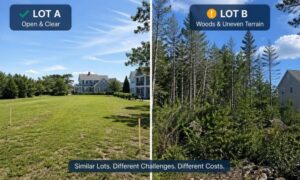
York has a mix of older homes, coastal land, and irregular lots.
That combination creates challenges.
Older deeds may use vague descriptions. Property corners might rely on natural features. Over time, those features shift or disappear.
Digital maps don’t keep up with that.
So even if a map looks neat, the real boundary may not follow those lines at all.
When online maps fall short
There are moments when you need more than a visual guide.
Planning a fence or addition is one. Buying property is another. Even something simple, like checking how much space you have, can lead to bad decisions if the map is off.
If the decision affects your land, guessing is not a good plan.
When survey mapping matters
Use survey mapping when accuracy counts.
That includes:
- Before building near a boundary
- Before buying or selling property
- Before making changes that depend on space or layout
A proper survey gives you a clear answer. No guessing. No second-guessing later.
The gap between digital and real
Online maps are useful. They help you get a quick view.
But they don’t replace field work.
That gap causes confusion. People expect the map to match reality. When it doesn’t, problems follow.
Survey mapping closes that gap. It connects what’s on paper to what exists on your land.
Think before you trust the map
If you’re looking at a property map and making decisions, pause for a second.
Ask one question.
Is this map verified on the ground?
If the answer is no, then you’re working with an estimate.
And estimates don’t hold up when it matters.
Survey mapping gives you something solid. In a place like York, that clarity can save you time, money, and stress.
Make decisions based on real measurements, not just lines on a screen.