
If you watched the huge surf video that WMTW shared from Short Sands Beach in York, Maine, you probably felt that mix of awe and worry. Waves crashed close to homes. Then real life kicked in. After a storm clip goes viral, people don’t just share it. They start fixing things—stairs, patios, short walls, and cracked slabs. That’s when a construction staking survey becomes your smartest “pause button” before a crew sets forms and pours concrete.
Coastal jobs move fast. However, coastal ground can change even faster.
What big surf changes on a coastal lot (even when the deed stays the same)
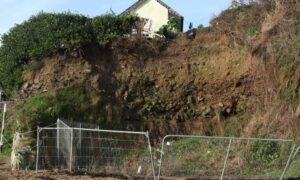
After heavy surf, the shoreline can look new. Sand shifts. Dune edges cut back. Paths and walkways lose their old shape. Because of that, the visual cues you relied on for years stop working.
Three changes cause most rebuild mistakes. First, sand moves and can hide or expose old points. Next, slopes change, so water runs in new directions. Finally, “reference spots” disappear, so people start guessing.
Meanwhile, your legal boundary does not move just because the beach moved. Still, the ground clues people trust can fail overnight.
The myth that leads to bad pours
Let’s clear this up: the boundary doesn’t “float” with the sand.
So why do rebuilds spark conflict? People measure from memory. A contractor lines up a corner from a dune edge. A homeowner points to a washed-out shrub line. Then forms go down in the wrong spot. After that, fixing it costs real money.
That’s why coastal rebuilds need one solid step before concrete: stake the work from reliable control, not from “what it looked like last year.”
Why the moment before the pour matters most
Concrete forms look temporary. However, the pour locks everything in. Once the truck shows up, shifting a footing or slab turns into demo, delays, and stress.
On coastal lots, inches matter for three reasons.
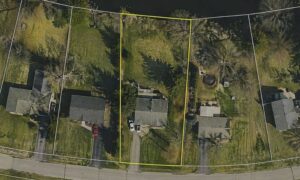
First, many lots run tight. You don’t have extra room to absorb a small mistake.
Second, shoreland rules can limit how close work can sit near the ocean, rivers, streams, and wetlands. In many cases, the town describes setbacks in the 75–100 foot range, depending on the feature and sub-district. So even a small “let’s slide it over” decision can create a permit headache.
Third, coastal rebuilds draw attention. Neighbors notice. Inspectors ask questions. That pressure rises when work creeps toward a line or a protected area.
So, if you wait until after the pour to confirm layout, you gamble with the most expensive step.
What a construction staking survey does on a coastal rebuild

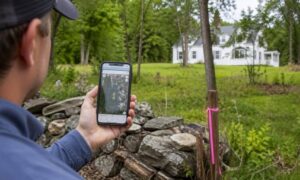
A construction staking survey gives your contractor clear, repeatable marks that match your plan and fit today’s ground. Surveyors don’t eyeball a dune edge. They set control, then they lay out the rebuild where it belongs.
On post-surf repairs, staking often focuses on the exact footprint (same size or adjusted), corners plus offsets your crew can keep during digging, key lines for walls, stairs, or slabs that must land “just right,” and elevation references when grade or drainage changed.
In short, staking turns “I think it goes here” into “build it right here.”
Three York-area rebuild scenarios where staking saves the job
Stairs and landings. Coastal stairs often sit close to shifting sand. When supporters settle, homeowners want the new stairs “in the same place.” That sounds simple. However, the ground may not support the old layout. With staking, the landing lines up cleanly with the door, and the steps fit the space without awkward angles.
Slabs and footings. When water undermines a slab, cracks show up fast. Crews sometimes set forms from a driveway edge or a patio border. Yet those edges may have shifted after repairs or settlement. Staking gives the crew a true layout before they dig, so the pour lands where it should.
Short walls and patio edges. Small walls fail when washouts change the slope. If you rebuild the wall on the “old line” without checking the new flow path, you may rebuild the same failure. Staking helps place the wall where it fits the updated grade, so you stop chasing the problem.
Don’t forget elevation: the coast punishes the “right spot, wrong height” mistake
Near the coast, location isn’t the only risk. Height matters too.
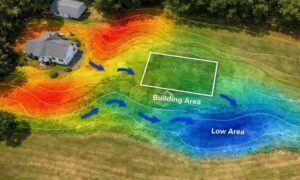
After storms, grades change and low spots move. So if you rebuild at the old height, you might trap water against the house. If you rebuild a landing too low, you invite pooling and ice. If you set a wall too low, the next runoff event can push right over it.
Good staking ties the layout to sensible grades, so your rebuild works with the site you actually have now.
A quick story I see too often
A homeowner calls a contractor for a new landing. The crew wants to pour tomorrow because the weather looks good. The owner says, “Put it where the old one was.” The crew sets forms from a damaged edge. The pour lands off. Now the steps don’t line up, and the landing crowds a side space. Everyone argues, and someone pays for a demo.
Now flip it. The homeowner schedules staking first. The surveyor sets corners and offsets. The crew pours once. The landing fits. The job ends quietly. Quiet jobs save money.
The simple takeaway
If that Short Sands surf video made you think about your own coastal property, you’re not alone. Repairs feel urgent, so people rush. However, rushing into concrete creates the biggest regrets.
Schedule the construction staking survey before your contractor sets forms. You’ll move faster after that, because you’ll build with confidence instead of correcting mistakes.