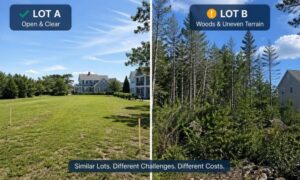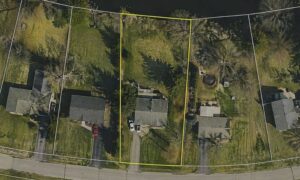
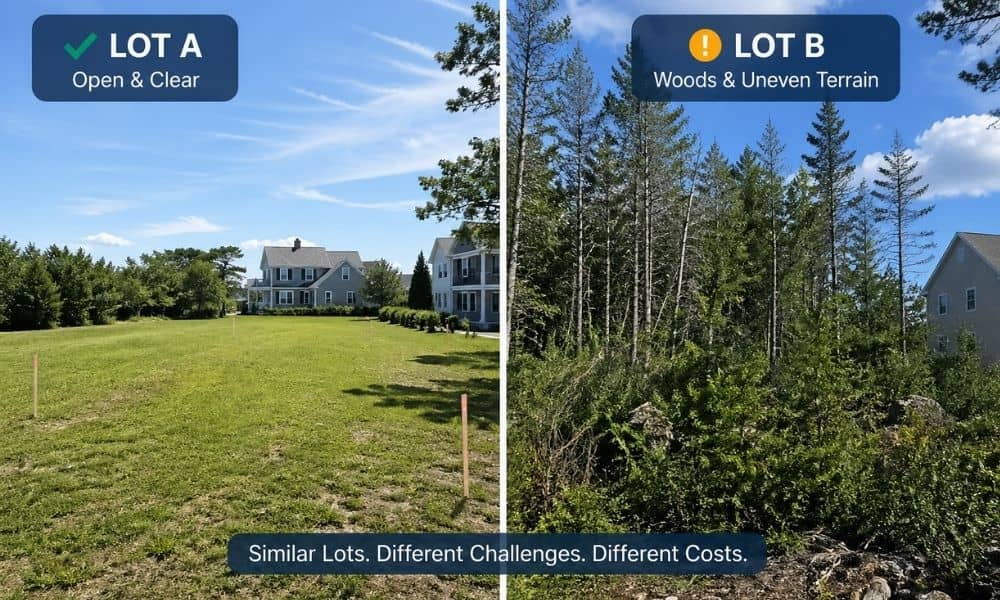
Two property owners in York call a surveyor in the same week. Their lots look almost the same. Both sit on quiet streets, and both have about the same size.
Then the quotes come in. One pays much less. The other pauses and wonders why.
This happens more often than people expect. Most assume the land survey cost in York should be about the same when two properties look similar. It sounds reasonable, but it rarely works that way.
The price usually comes down to what the surveyor finds on each lot. Some details are easy to spot. Others only show up once the work starts, and that’s where the difference in cost begins.
Why Land Survey Cost Isn’t Based on Size Alone
Lot size feels like the obvious factor. Bigger land should cost more. That sounds logical, yet it only tells part of the story.
Surveyors don’t charge based on square footage alone. They price based on time, effort, and risk. A smaller lot can take more work than a larger one.
Two lots can match on paper. Still, one may take twice as long to survey. That’s where the price gap starts.
Old Records Can Raise the Cost
York has many older properties, especially in coastal areas where lot lines were recorded decades ago. Some go back even further. That history can make things tricky.
A clear deed helps the survey move faster. On the other hand, unclear records slow everything down. Some deeds use vague wording. Others don’t match nearby properties.
When that happens, the surveyor must dig into old documents. They may check past surveys. They may compare records from nearby lots. That takes time.
More time means a higher cost. So even if two lots sit side by side, one may come with a longer research process.
The Ground Itself Changes the Price
Next comes the land itself. One lot may look clean and open. The other may hide thick brush or uneven ground.
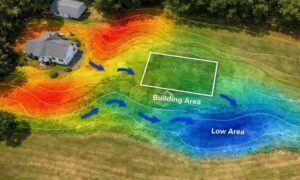
In York and nearby coastal areas, rocky ground and ledge are common. Some lots slope more than they seem at first glance. Dense trees can block access, and wet spots can slow movement.
A survey crew needs to walk the land. They carry equipment. They mark points. Tough ground makes each step harder.
So even if two lots look similar from the road, the actual field work can feel very different.
Missing Markers Add More Work
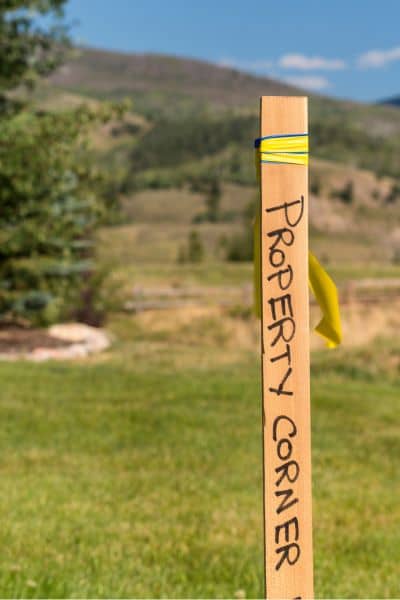
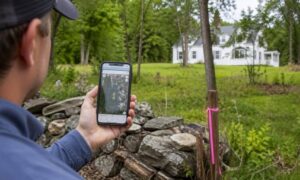
Surveyors rely on physical points in the ground. These markers help confirm property lines. Some lots still have them in place.
Others no longer have them in place.
Markers can get buried. They can shift. Sometimes they disappear over time. When that happens, the surveyor must rebuild the boundary from scratch.
That means more measuring. More checking. More time in the field and in the office.
This step alone can change the cost in a big way.
What You Need From the Survey Matters
Not every survey serves the same purpose. One owner may only need basic line confirmation. Another may need detailed results for a project.
More detail means more work. The surveyor may need to gather extra data. They may need to create a full drawing. They may need to verify more points.
That difference affects cost right away.
So two similar lots can have different prices simply because the owners need different outcomes.
Nearby Conditions Can Complicate Things
Your lot doesn’t exist on its own. It connects to the properties around it.
Sometimes those nearby lines stay clear. Other times they raise questions.
You might see fences that don’t match the true line. You might find structures close to the edge. These situations require careful checking.
The surveyor must confirm where lines actually sit. That can take extra time. It also adds another layer of responsibility.
More effort leads to a higher cost.
Timing Can Also Affect Pricing
The time of year plays a role. Maine winters bring snow, which can cover key points on the ground. Spring and summer bring thick growth.
Both situations slow down field work.
Scheduling matters too. A rush job may cost more because it pushes other work aside.
So even if two owners call for the same type of survey, timing alone can change the price.
Why Online Price Estimates Miss the Mark
Many people check prices online before calling a surveyor. They see a range and expect their quote to land somewhere in the middle.
That doesn’t usually happen.
Those estimates assume everything is simple. Clear records, open land, and easy access. Real properties rarely line up that way. Once people start to see what actually affects survey costs, the difference in price starts to make more sense.
A surveyor works with what’s really on the ground, not what an online estimate assumes. That’s why quotes often come in higher than expected.
How to Get a More Accurate Quote
You can take a few simple steps before calling.
Start with any documents you have. Old surveys help. Deeds help too. The more information you provide, the better the estimate.
Next, think about your goal. Are you buying, building, or settling a question about your property? Clear goals help the surveyor understand the scope.
Then ask what the quote includes. Make sure you know what you’re getting. That avoids confusion later.
These steps won’t remove every surprise, but they can reduce them.
Two Similar Lots Rarely Mean Equal Work
At first glance, two properties can look the same. Same size. Same street. Same layout.
Yet the work behind each survey can differ in many ways. Records, terrain, markers, and nearby conditions all play a part.
Land survey cost reflects that effort. It reflects the time needed to get accurate results.
So when one quote comes in higher than another, it usually points to something deeper. The lot may carry hidden challenges that only show up during real work.
That’s why price gaps happen. When you understand those differences early, it’s easier to plan and avoid surprises.
If you’re planning a project or purchase, talking to a local surveyor early can help you understand what your property will actually require.