
If you plan to buy land, build a home, or settle a boundary question, you will likely need a property survey sometime soon. In most years, this process feels simple. You call a local surveyor, get on their schedule, and wait for the crew to mark your lines. But late in 2024, a major shift in the southern Maine surveying industry took place. One long-standing surveying firm merged with a large regional company, and this change may impact how fast you can get a survey and how much it may cost in 2025.
Many local homeowners noticed this trend because the smaller company served York County for decades. People trusted their local knowledge and small-team approach. The larger regional firm brought in more staff, advanced tools, and a broader range of services. Now that these two styles have combined, York-area clients could experience new timelines, new expectations, and a new way of ordering a property survey next year.
A Big Change for a Small Community
For years, homeowners in York, Kittery, Ogunquit, Wells, and nearby areas relied on local surveyors who knew every corner of the region. They handled boundary checks, topographic surveys, septic designs, subdivision layouts, and construction staking. They also understood the unique challenges of working near the coast, in wooded parcels, and around old deed descriptions.
With the merger, a larger company now manages this work. Bigger firms operate differently. They organize their schedules with more structure, cover bigger territories, and focus on a mix of residential and commercial projects. They also bring in more technology, more support staff, and more internal steps for booking work.
This shift means that the surveying landscape no longer feels like a small network of local providers. Instead, it leans toward a more regional model, and that change will affect homeowners in several ways.
How It Might Affect Your Next Survey
Some changes will help clients, while others may create challenges. Here is what homeowners may notice in 2025.
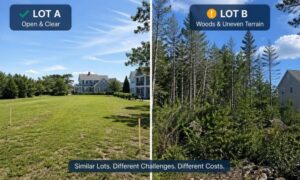
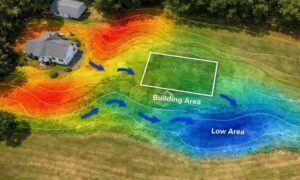
More advanced tools will likely show up more often. Modern surveying companies use drone mapping, LiDAR scans, and detailed GIS layers to measure land quickly and with high accuracy. These tools help when thick trees hide boundary markers or when a property sits on steep slopes or near the shoreline. For homes with tricky terrain, this technology could improve precision and give you better digital files.
Large projects may also move faster under a regional firm. If you plan a subdivision, a commercial build, or a major renovation, a larger surveying team can handle complicated zoning steps and multi-layered site plans more easily. Builders may appreciate this smoother process.
However, small residential jobs may not get the same priority. Simple surveys for fences, decks, garage additions, or real-estate closings often sit behind larger development projects. Because of that, homeowners may notice longer wait times. Many big firms require minimum fees as well, so smaller jobs sometimes cost more than they did with a traditional local surveyor.
Fewer independent options is another factor. When a long-trusted small firm becomes part of a larger company, the number of local choices drops. With fewer options and steady demand, prices and scheduling can shift in ways homeowners feel right away.
Why Local Knowledge Still Matters
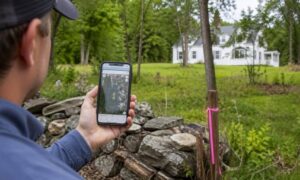
Even with better technology, deep local knowledge still matters in York. Many properties here have histories that stretch back decades. Some deeds describe boundaries using old stone walls, trees that no longer exist, or landmarks that changed over time. Surveyors who worked in the area for years understood these quirks and knew what to look for.
Under a larger company, you still get skilled surveyors, but the process changes. You may talk to several staff members instead of one familiar point of contact. You may go through more steps before someone visits your site. You may also work with people who cover a wider region rather than a crew focused only on York County.
This does not hurt accuracy, but it changes the experience. For many homeowners, that difference feels noticeable.
Demand in York Will Keep Growing
York and the surrounding towns continue to attract buyers who want coastal living, strong property values, and quiet neighborhoods. Homes sell quickly, and many older properties now go through renovations or expansions. Every change like this needs surveying support.
Regulations also drive survey demand. Flood-zone rules shift often. Elevation requirements affect coastal homes. Shoreland zoning remains strict. Even small projects sometimes require updated maps or elevation information. Real-estate closings also rely on clear boundary data, especially when buyers ask for proof of exact lot lines.
With demand rising, a shift in the supply of surveyors matters even more.
How Homeowners Can Prepare for 2025
You can stay ahead by planning early. The most important step is to schedule your survey well before you need it. Spring and summer fill up fast, and surveyors often work weeks or even months ahead.
Share any past documents as soon as you book. Old deeds, sketches, septic plans, or earlier surveys help the field crew prepare before they visit your land. This reduces delays and helps the team understand tricky features.
Ask clear questions when you call. Ask about wait times, pricing, and whether they still take small residential jobs. Some offices now focus heavily on development work, so clarity helps you avoid surprises. You should also ask if they use drones or if they rely mainly on ground equipment, especially if your lot has heavy tree cover.
Choose a surveying team familiar with land patterns. Even inside a large regional company, some crews have more local experience than others. That experience still makes a big difference when working with old boundary descriptions or coastal terrain.
Final Thoughts:
A major merger in southern Maine’s surveying world will shape how people order surveys in 2025. You may see better technology, faster work on big projects, and clearer results. At the same time, you may also run into longer wait times, higher minimum fees, and fewer local options.
Because of this shift, planning ahead matters more than ever. Property surveys take more coordination now, and they work best when you give yourself enough time. If you stay ahead of the schedule and choose a surveyor who truly knows the York area, you can still get reliable results and keep your project moving without stress.